
By Oluwafemi Davies, Nigeria MLS Properties
Property fraud in Nigeria is not rare. It is systematic. The same scams run in different cities with different actors and the same outcome: a buyer parts with money and ends up with nothing — or with a property they cannot build on, cannot sell, and cannot live in without a legal fight.
This guide is for serious buyers. Not to scare you away from the market — Nigerian real estate is one of the best asset classes available to Nigerian investors, full stop — but to make sure you never become a statistic.
The Most Common Property Scams in Nigeria
1. The Duplicate Sale
The same property is sold to multiple buyers simultaneously. Each buyer gets what looks like valid documentation. The seller collects from all of them, then disappears or claims the other transactions are fraudulent. Courts then have to determine who has the better claim — a process that can take years.
2. The Forged Title Document
A fake Certificate of Occupancy or Deed of Assignment is produced with enough quality to pass casual inspection. Sometimes these are photocopies passed off as originals. Sometimes they are genuine documents that have been altered — the name changed, the plot number modified.
3. The Omo Onile Ambush
You buy land, you start developing, and then members of the original land-owning family arrive to demand payment or stop the work. The seller may have had legitimate title but the family’s residual claims were never properly extinguished. Sometimes the “omo onile” are outright extortionists with no legitimate claim — but distinguishing between the two requires legal work, and construction stops either way while you figure it out.
4. Government Acquired Land
Land that has been compulsorily acquired by the government for a road, a project, or a layout is still being sold by people holding what appears to be valid title. The acquisition may have happened 10 or 20 years ago and the original owner either didn’t know, didn’t care, or is deliberately concealing it.
5. The Unregistered Developer
An off-plan development is marketed without LASRERA registration (in Lagos) or equivalent. Deposits are collected. Construction delays begin. Then the developer goes silent. By the time buyers realise the situation, the money is gone and the developer’s legal status makes recovery difficult.
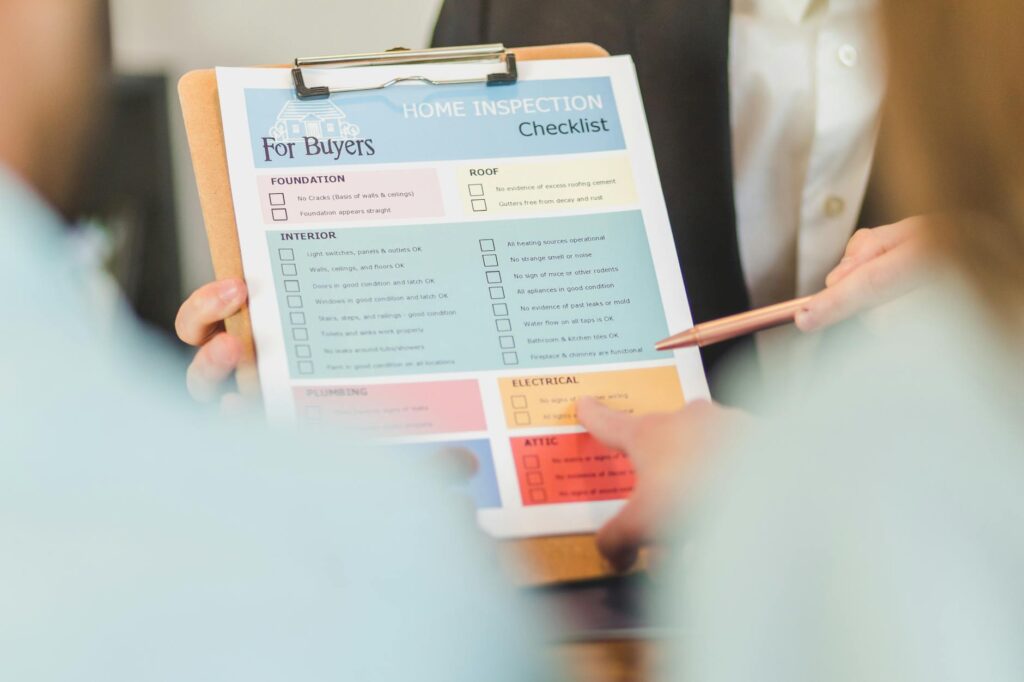
The 7-Point Safety Checklist
| # | Check | How to Do It |
|---|---|---|
| 1 | Verify agent registration | Ask for LASRERA licence number (Lagos) or equivalent. Verify on the LASRERA portal. |
| 2 | Verify title documents | Conduct a search at the relevant Land Registry. Use TitleSecure™ for speed. |
| 3 | Check the survey plan | Verify at the Surveyor General’s office. Hire an independent surveyor to confirm beacons on site. |
| 4 | Check for government acquisition | Ask at the Lands Bureau. Check relevant gazette publications. Your lawyer should do this. |
| 5 | Investigate family land claims | Ask specific questions about family ownership. Get written consent from the family head if applicable. |
| 6 | Inspect physically | Visit the property in person. Never buy based solely on photos or an agent’s word. |
| 7 | Use a property lawyer | Engage an NBA-registered property lawyer for the transaction. Do not try to save money here. |
Red Flags That Should Stop You
- Price significantly below market: If a property is priced 30–50% below comparable listings in the same area with no obvious reason, treat it as a red flag, not a deal.
- Cash-only insistence: Legitimate sellers accept traceable payment. A seller who insists on cash with no paper trail is protecting themselves from accountability.
- Urgency pressure: “Someone else is about to pay” is a manipulation tactic. Real property transactions take weeks. There is always time to verify.
- Originals are unavailable: Title documents should exist as originals. If the seller claims originals are “with the bank”, “being processed”, or “in the village”, this is a problem.
- The agent has no fixed office: WhatsApp-only agents with no verifiable business address are operating without accountability.
- The property is in an area with active family disputes: This is not disqualifying on its own, but you need to know about it before you commit.
How TitleSecure™ Protects You
TitleSecure™ by Nigeria MLS Properties runs AI-powered verification against LandVerify’s registry database. Within 3–7 business days, you get a verified report on:
- Whether the title document is genuine and registered
- Current registered owner and chain of ownership
- Active encumbrances or court orders
- Family dispute history on the parcel
- Government acquisition status
Full verification (₦50,000) includes a verification certificate that you can present to a bank, court, or any counterparty as proof of due diligence. For any property transaction above ₦10 million, ₦50,000 for certainty is not a significant cost.
The Role of Your Lawyer
TitleSecure™ is a powerful tool but it does not replace a property lawyer. Your lawyer handles the documentation of the transaction itself — drafting the Deed of Assignment, perfecting the title at the Land Registry, obtaining Governor’s Consent. TitleSecure™ tells you whether the title is safe to proceed on. Your lawyer then executes the transaction correctly.
Budget 5–10% of the property value for legal fees, title perfection, and registration on a standard Lagos transaction.
Frequently Asked Questions
What is the safest type of title to buy in Nigeria?
A Certificate of Occupancy with Governor’s Consent for all previous transfers, registered at the Land Registry, with a clean search result showing no encumbrances or disputes. This combination gives you the strongest possible legal position as a buyer in Nigeria.
Is buying off-plan safe in Nigeria?
Off-plan carries higher risk than buying a completed property because you are effectively lending money to a developer on the promise of future delivery. To reduce that risk: verify LASRERA registration (in Lagos), verify the land title of the development site, check the developer’s track record on previous projects, and get a formal sale and purchase agreement reviewed by your lawyer before paying any deposit.
Can I sue if I am defrauded in a property transaction?
Yes, but litigation in Nigeria is slow and expensive. Criminal complaints to the EFCC are possible for fraud cases and can be more effective at applying pressure than civil suits. Prevention through proper due diligence is significantly more effective than any post-fraud remedy.
Do I need a lawyer if I am buying from a developer directly?
Yes. Developer sale agreements are prepared by the developer’s lawyers, for the developer’s interests. You need independent legal advice to understand what you are signing, especially on off-plan purchases where significant deposit amounts are committed before any physical delivery.
Buy Safely with Nigeria MLS
Every listing on Nigeria MLS is agent-verified. Every agent is LASRERA-registered. TitleSecure™ is available on every sale listing directly from the listing page.
Find a verified agent or start a TitleSecure™ verification before your next property transaction.